Haiti extradites Badio and 17 Colombians in Moïse killing to Miami
A U.S. military plane carried the group from Port-au-Prince on Sunday, days before Christian Sanon's Miami trial.
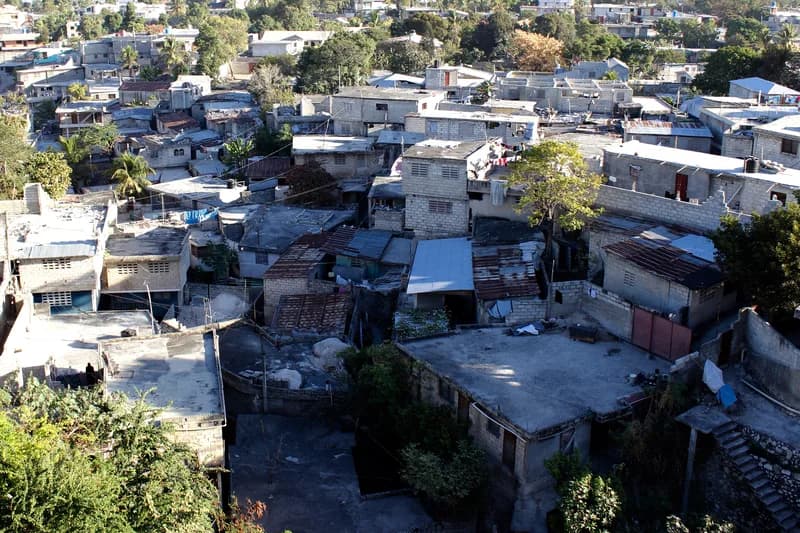
A U.S. military plane carried 18 suspects in the July 2021 assassination of Haitian President Jovenel Moïse out of Port-au-Prince on Sunday and flew them to the United States, where they will face federal proceedings in Florida, according to Jason Reding Quiñones, the U.S. attorney for the Southern District of Florida.
The group includes Joseph Félix Badio, a former employee of Haiti's Ministry of Justice who worked in an anti-corruption unit, and 17 Colombian former soldiers, The Associated Press reported. Quiñones did not identify the 18. Badio's name appeared on a flight manifest obtained by the Miami Herald, which reported that Haitian authorities had been resistant to handing him over because he is a major part of their own slow-moving inquiry.
Haiti's Ministry of Justice and Public Security said in a statement that it surrendered the suspects "to allow for their trial" and that the government "has decided to strengthen its cooperation with the American judicial authorities," according to The Associated Press. Justice Minister Patrick Pelissier said the Haitian procedure "remains confronted with major difficulties and has not, to date, resulted in a trial being held, after five years of proceedings," Reuters reported.
What prosecutors said in Miami
Quiñones wrote on X that the 18 were "transported in military plane from Haiti to face American justice in the Southern District of Florida," the Miami Herald reported. He said 30 people have been indicted over the killing. Brett Skiles, the FBI special agent in charge, said there were multiple arrests in the United States and abroad on Sunday, and that the FBI and others "remain steadfast in ensuring that all individuals who allegedly sought profit from the assassination of a head of state are held fully accountable."
- 18 suspects flown from Port-au-Prince on a U.S. military aircraft
- 30 people indicted in the United States in the case
- 4 men convicted by a Miami jury in May
- At least 5 others have pleaded guilty and are serving life sentences
Lawyers involved in the federal prosecution in South Florida said they were unaware of the transfer, the Miami Herald reported. The case in Miami federal court was recently placed under seal, they noted, which they read as an indication that new charges or defendants have been added. Officials declined to comment on the operation, citing the sensitivity of the case.
The extradition lands days before Christian Emmanuel Sanon, a South Florida resident whom the alleged conspirators picked to replace Moïse as president, is scheduled to go on trial on September 28. Before Sunday, Sanon was the last major defendant already in U.S. custody awaiting trial in the case, the Herald reported. His trial was delayed because of health issues. He was indicted with several others, among them four South Florida men convicted earlier this year.
Colombian families caught by surprise
Diana Marcela Arbeláez Llano, the wife of one of the suspects, said in a phone interview from Colombia on Sunday that the extradition caught her and the relatives of the other men by surprise, The Associated Press reported. She said she hopes they have the opportunity to prove their innocence.
Arbeláez said all the detained Colombians are very sick given the conditions in Haitian prisons, and that while she hopes their health will improve in the United States, she remains worried. Relatives had complained for years about repeated delays in the Haitian process after the men were arrested in 2021, with the investigation stalled by gang violence, death threats and a crumbling judicial system.
We never imagined that the United States would have taken them so suddenly.
The Colombian soldiers have testified in Haiti that they were beaten, threatened with death and forced to sign documents in a language they do not understand. Authorities have said some of the suspects envisioned a coup rather than an assassination, according to The Associated Press.
The Colombians were among the suspects arrested in Haiti in July 2021, days after the attack. Haitian police said at the time that 28 attackers carried out the killing, 26 of them Colombians and two Haitian-Americans.
Badio considered a key suspect in the case
Badio was arrested in Haiti in October 2023, when police spotted him inside a Pétion-ville supermarket after more than two years in hiding, according to the Miami Herald. He has maintained his innocence and has indicated he has information about the assassination. Defense attorneys in the United States for other suspects have asserted that he was the mastermind behind a plan to use the president's arrest to assassinate Moïse.
Badio's name was raised repeatedly in testimony and evidence at the trial of the four men, the Herald reported. Text messages presented in court showed him playing a central role as the plot evolved from plans to kidnap Moïse and remove him from power into an assassination. A U.S. permanent resident, Badio had a home in New York, and during that trial it was noted that the mortgage on the house was paid off after the killing.
Several people who pleaded guilty in the case, and who were at a mountaintop house on the night the former Colombian soldiers stormed the president's residence, testified about Badio's presence, according to the Herald. One witness said he gave the signal for the group to leave the house and head down the mountain. Badio also allegedly armed the Colombians and told them Moïse kept a suitcase containing cash in his second-floor bedroom, directing them to its location and to two firearms in the house.
How Moïse was killed
Moïse, 53, was shot 12 times at his private residence in the hills above Port-au-Prince on July 7, 2021, in an attack that also wounded his wife, Martine Moïse. The killing left a gaping political vacuum in the Caribbean nation and emboldened powerful armed groups, Reuters reported. It prompted multiple investigations and indictments in Haiti and the United States.
Haiti's case never reached a trial
Five years of Haitian proceedings against the men sent to Florida on Sunday, among them Badio and the 17 Colombian former soldiers, produced no trial. Judges assigned to the case repeatedly resigned, citing fears for their lives, and gangs seized control of the downtown Port-au-Prince courthouse where suspects were being interrogated. In October 2025, justice officials in Haiti asked the United States and Canada for help after a local court of appeals ordered a new investigation into the killing, the third inquiry of its kind.
Pierre Espérance, a prominent human rights activist in Haiti, called the slow pace of the Haitian case and the transfer of the 18 suspects a "disgrace for the Haitian justice system," Reuters reported. He argued for strengthening the country's justice system so that complex cases can be tried inside Haiti rather than sent to the United States for prosecution.
Convictions already recorded in Florida
A jury in Miami federal court convicted four men on May 8 of conspiring to kill or kidnap Haiti's elected leader and providing material support for the plot. Arcángel Pretel Ortiz, Antonio Intriago, Walter Veintemilla and James Solages had all pleaded not guilty. Prosecutors argued during the nine-week trial that the men assembled 22 former Colombian soldiers and supplied them with money, guns, ammunition and tactical vests. The four are due to be sentenced in February. At least five other defendants have pleaded guilty and are serving life sentences.
| Defendant | Status in the U.S. case |
|---|---|
| Arcángel Pretel Ortiz | Convicted by a Miami jury in May |
| Antonio Intriago | Convicted by a Miami jury in May |
| Walter Veintemilla | Convicted by a Miami jury in May |
| James Solages | Convicted by a Miami jury in May |
| Christian Emmanuel Sanon | Awaiting trial |
| Joseph Félix Badio | Extradited Sunday to the Southern District of Florida |
Sanon was initially picked by the alleged conspirators to replace Moïse, authorities said. Once in power, the plan was for him to award contracts to a company known as CTU for infrastructure projects, security forces and military equipment. Ortiz and Intriago were principals for CTU. U.S. prosecutors have argued that suspects in the case used South Florida as a "staging ground for a deadly foreign plot."
The UN drugs office estimated in July 2025 that gangs controlled about 90% of Port-au-Prince; UN figures this year are lower, at 80 to 85%. Haiti has held no national election since 2016, and the electoral council has set a first round for December 13, 2026. About 1.5 million Haitians are displaced inside their own country, according to UN figures. Since February 2026, Prime Minister Alix Didier Fils-Aimé has been the country's sole executive authority, and a UN-authorized Gang Suppression Force capped at 5,550 personnel has a mandate that expires on September 30, 2026, which the Security Council is expected to vote on renewing that day.
What happens next
Haiti's justice ministry said evidence from the American case should also feed its own inquiry through mutual legal assistance, and that several people detained in Haiti face U.S. indictments or warrants in the case. The 18 flown to Florida are accused and have not been convicted. Quiñones said prosecutors will follow the evidence to those who financed, facilitated or supported the plot, and that five years after the killing they are not finished.
Sources
- The Associated Press: 18 suspects accused in the 2021 killing of Haiti's president being extradited to U.S. (WRVO)
- Miami Herald: Key Haiti suspect, 17 Colombians in Moise's killing extradited to Miami ahead of trial (Spokesman-Review)
- Reuters: Suspects in 2021 killing of Haitian president flown to U.S. to face trial (The Detroit News)
- U.S. Attorney's Office, Southern District of Florida: announcement on the transfer of 18 defendants from Haiti
- UN Integrated Office in Haiti: casualty figures for 2025
- The Haitian Times: Haiti sets December 13 for the first round of elections
- UN Security Council Resolution 2793 (2025), establishing the Gang Suppression Force