Army Reserve weighs six unit types for possible Cuba mission
Internal message sought availability within 90 to 120 days; no unit has received deployment orders, CBS News reported.
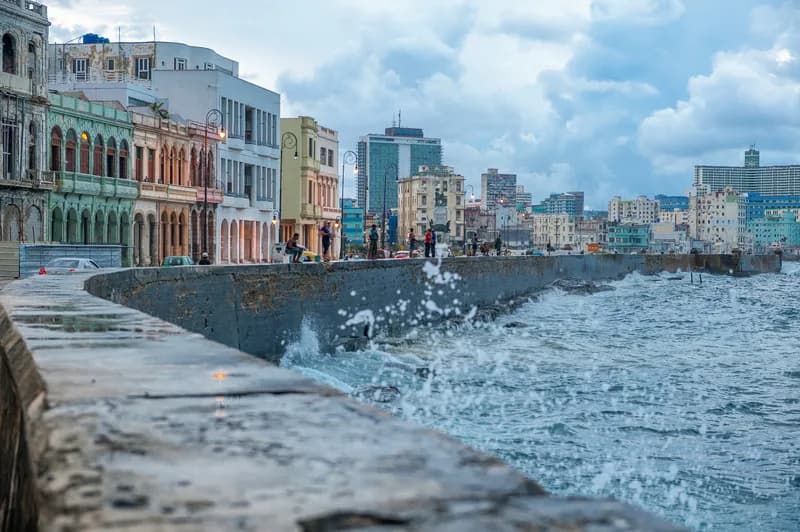
The U.S. Army Reserve is examining whether it can provide U.S. Southern Command with police forces, medical personnel and other support units within the next four months, according to an internal Army message reviewed by CBS News. The document makes no reference to Cuba, but multiple U.S. officials told CBS News that the request is part of continued military planning aimed at the island. They spoke on condition of anonymity because they were not authorized to discuss the matter publicly.
Due to operational security concerns, we do not disclose details or comment on U.S. operational movements or potential deployment timelines associated with current or future operations, contingencies, or planning.
There is no indication in the document that any units have received deployment orders. The message does not say how many troops would be needed in Southern Command's region, which covers Central and South America, including the Caribbean, where any forces might be sent, or what operation they would support. The planning is unfolding as the Trump administration puts intense economic pressure on Cuba and presses the island to make political reforms.
What the Army Reserve message asks
Army Reserve headquarters is seeking feedback from subordinate commands on the possible availability of six types of formations that would fall under the authority of U.S. Southern Command, according to the document. The units would "possibly [be] needed in 90-120 days," the message said, and commands were directed to send their responses to Army Reserve headquarters by Sept. 25. The message was generated the week before CBS News reported it on Sept. 25.
Among the formations sought is a combat sustainment support battalion, which specializes in coordinating logistics such as transportation, maintenance, fuel and supply needs, along with an engineer battalion. The message also asks about an expeditionary sustainment command, a headquarters that oversees logistics across a theater of operations.
Two medical formations appear on the list. One is a medical brigade, which commands and coordinates medical units; the other is a forward resuscitative and surgical detachment, which provides emergency surgery and trauma care closer to U.S. forces.
The sixth is a military police brigade. Those units typically oversee military police forces responsible for security, detention and other law enforcement missions.
CBS News, which first reported the message, said the Army Reserve did not respond before publication and that it was withholding certain details that could put U.S. service members at risk. Southern Command's statement made no mention of Cuba and did not address the six formations listed in the document.
Trump tells the U.N. that Cuba will fall
President Donald Trump told a United Nations gathering of world leaders in New York on Sept. 22 that his administration is seeking "a fundamental change in the situation in Cuba," which he described as "an absolutely failed state" that "will fall," the Miami Herald reported. He said the country is under the greatest pressure it has ever faced and is failing.
Trump said Secretary of State Marco Rubio was handling negotiations with Havana and was "deep into negotiations with Cuba." The United States, he said, would not allow a haven for foreign adversaries to threaten America on its own doorstep. Cuban diplomats attending the assembly walked out of the room.
Communism will never be coming to America, but freedom will be coming to Cuba and safety and security will be coming to Mexico.
Citing a State Department report, Trump accused Cuba of spending decades coordinating with left-wing radicals and communist networks inside the United States, and said it had cultivated ties to groups including the Communist Party USA, Antifa and the Democratic Socialists of America. The remarks returned to a subject he raised repeatedly earlier this year, when he spoke of taking Cuba and said its communist government would soon fall.
The speech also covered the U.S. capture of Nicolás Maduro, a large oil deal signed with his successor, interim Venezuelan president Delcy Rodriguez, who was in the room, and the military strikes at sea against suspected drug traffickers. Trump said the United States was reasserting American power, including military power where necessary, in the region and around the world.
Rubio has been in talks with Raúl Guillermo Rodríguez Castro, a grandson of Raúl Castro, and CIA director John Ratcliffe traveled to the island in May to press Cuban leaders to accept Trump's offer, the Miami Herald reported. The administration has sanctioned Cuban officials, state enterprises and military companies through the year and has cut off oil supplies to the Cuban government. Cuban leaders have resisted political concessions while launching limited economic reforms.
Reconnaissance and an air assault option
American forces conducted reconnaissance operations earlier this year on the seafloor and the maritime approaches surrounding Cuba, multiple U.S. military personnel told CBS News.
U.S. airpower components were separately placed on heightened readiness and directed to pre-stage personnel for a potential deployment, CBS News reported. Those plans did not come to fruition.
Military planners examined a range of options for possible action against the island, CBS News reported in July, among them an Army-led air assault involving thousands of soldiers, to be carried out by the 101st Airborne Division, the only unit trained for such a task. U.S. officials stressed at the time that the briefings were not an indication that the president or the Pentagon had decided to go forward with an operation.
U.S. intelligence officials were assessing in May how Cuba would respond to possible American military action, CBS News reported, as the Trump administration accused Havana of strengthening ties with Russia, China and Iran. The intelligence community's 2026 annual threat assessment largely portrays Cuba as an enabling environment for larger geopolitical competitors rather than as an independent strategic threat.
New sanctions and a wider hemispheric push
The State Department designated eight entities and three individuals on September 17, an action it said targeted the Cuban regime's nickel exploitation apparatus and military-industrial complex. The designations were made under Executive Order 14404, signed May 1, 2026, which authorizes sanctions on foreign persons who meet criteria related to repression in Cuba and other threats to U.S. national security and foreign policy.
Four military enterprises were named: SIMPRO, which develops and manufactures simulators and training for the Cuban Revolutionary Armed Forces; CIDNAV, which runs research programs for the Cuban Revolutionary Navy; CIDAI, which works on infantry armaments; and GELCOM, which produces electronics and communications products. Four state entities tied to the nickel industry were also designated: SERCONI, CEPRONIQUEL, CEDINIQ and PINARES S.A. The department said the nickel sector generates hard currency for the Cuban government.
The three individuals are Joaquin Francisco Cancio Monteagudo, a senior colonel in the armed forces and director general of SIMPRO; Dioglis Pedrera Arguello, a captain and director general of CIDNAV; and Julio Hurtado Betancourt, a senior colonel and director general of CIDAI. Property and interests in property held in the United States by those designated are blocked and must be reported to the Treasury Department's Office of Foreign Assets Control, as are entities owned 50 percent or more by blocked persons.
Trump has asserted a more muscular U.S. role in the Western Hemisphere since reentering office, under what officials have dubbed the Donroe Doctrine, a corollary to the Monroe Doctrine focused on limiting foreign adversaries and other perceived threats in the region. American and Ecuadorian troops launched a joint mission in April aimed at dismantling a suspected criminal hub operated by a narco-terrorist organization. On Sept. 24, U.S. troops and Drug Enforcement Administration agents helped Ecuadorian authorities arrest more than 30 members affiliated with Mexico's Jalisco New Generation Cartel.
Strikes at sea and Havana's response
U.S. forces have killed more than 230 people in 70 strikes in the Caribbean Sea and the eastern Pacific Ocean since September 2025, according to CBS News. The campaign is a stark contrast with the military's historical role of maritime drug interdiction and arrest, and some legal experts have said the strikes amount to illegal extrajudicial killings.
Carlos Fernandez de Cossio, Cuba's deputy foreign minister, told PBS in mid-September that his government sees no progress in talks with the United States and accused the administration of committing an "international crime" by blocking oil supplies. He said Cuban leaders would commit "treason" if they agreed to U.S. demands about how the country should be organized, and that Cuba would have to cope on its own.
Miguel Díaz-Canel, Cuba's president and himself under U.S. sanctions, skipped the General Assembly and sent a delegation led by foreign minister Bruno Rodriguez. He answered Trump's speech on X, writing that the U.S. president repeats at the U.N. that Cuba poses a threat because he is unable to justify the punishment inflicted upon the Cuban people and what he called a genocidal economic war.
Lies are the recourse of those who refuse to accept the Cuban people's right to self-determination.
The feedback the Army Reserve requested was due at its headquarters on Sept. 25, and the 90 to 120 day window described in the message would put any availability roughly four months out. There is no indication in the document that any unit has received deployment orders, and the message itself never names Cuba. Southern Command said it continuously coordinates with the Joint Force to assess a range of potential requirements across its area of responsibility in support of assigned missions.